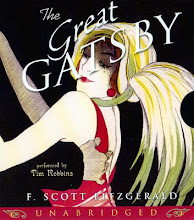
Thursday, May 20, 2010

1920's Gangsters


The Prohibition era during the Roaring 20's sparked new waves of gang-related crime such as bank robbery and bootlegging. American gangsters usually controlled gambling, prostitution, and liquor stores, while making booze and money, fancy suits, diamond rings, guns, and women. Even though most were murderers and criminals, many gangsters were involved in social, economic, and political problems during the time.

Even though bank robberies and bootlegging were happening everywhere, most gangsters were found in the same area. After commiting a crime, they would usually flee to a neighboring state as their hideout. If criminals weren't hiding out, they were spending their time in jail.

Some of the most infamous gangsters include Bonnie and Clyde, John Dillinger, and Al Capone. They became legends as their deadliest and wildest stories hit the front pages of the newspapers. They were among the most notorious criminals at their time. Even though each of the them had their jail time, they still continued to commit crimes in their own adept and secretive way.

Wednesday, May 19, 2010

Film Versions of The Great Gatsby

There are four different film versions of The Great Gatsby. The first filmed version of The Great Gatsby was a silent film, released in 1926 and made by the Famous Players-Lasky Corporation and Paramount Pictures. The run time of the film was 80 minutes long and was based on the stage play The Great Gatsby, adapted by the original novel. No copies of this movie are still in existence.


The Second film version of The Great Gatsby was released in 1949 and was made by Paramount Pictures. This black and white colored film was a bit longer than the first one film, and this one runs in at about 91 minutes.The third version of the film, this time a colored film, was released in 1974, and was distributed by Paramount Pictures and Newdon Productions. This version is longer than the first two films and clocks in at 144 min. This Film won two Acadamy Awards for best costume design and best music.


The fourth version film on The Great Gatsby was released in 2000, as a television film, made by the A&E Cable Network. This version isn't much different from the rest of The Great Gatsby film versions, but by reviews, is said to be the best representation of The Great Gatsby yet. Though this is the last version of the novel filmed so far, it is rumored that there may be another version of it in the future, boy i hope there isn't, four versions of the film is enough, five is just ridiculous.

Source: http://www.imdb.com

Tuesday, May 18, 2010

The Women of Gatsby


Daisy Buchanan is Nick Carraway's cousin. She's also the woman that Gatsby loves. She fell in love with Gatsby when he was training to be an officer in Louiseville, but she ended up marrying Tom Buchanan, a wealthy and powerful man. They live in the East Egg of Long Island but they end up having problems with their marriage.


Jordan Baker is Daisy's friend. Nick becomes romantically involved with her later on in the book. She's famous and a competitive golfer. She's a beautiful young and dishonest woman and an example of "new money" during the 1920s. She cheated to win her first golf tournament.


Myrtle Wilson is Tom's lover, even though she already has a husband, George Wilson. George owns a garage in the valley of ashes and they don't have much, so she desperately looks for a resolution, and chooses Tom even though he only treats her as an object to be owned.


(information from The Great Gatsby by F. Scott Fitzgerald)

Sunday, May 16, 2010

The 1920s


The Roaring Twenties was a time of music, fashion, rebellion, and was different from other periods of time in history.


Music and dancing in the Roaring Twenties was usually face paced, and full of energy. People used these dances and music to get away from their problems, and from the thought of war. Most of the dancing went to jazz music, and many thought of the dancing as scandalous because the dancing had much contact with their partner, which was uncommon in earlier dances. A popular dance of the era was the Charleston (the dance in the picture above) which it "characterized by outward heel kicks combined with an up and down movement achieved by bending and straightening the knees in time to the music."


Fashion in the 1920s was a dramatic change from the years before. Dressers were made lighter than before, with different colors, full of patterns, and were shorter than they were before. Hats, shoes, stockings, handbags, dresses and jewelry were what was in style for women, all full of vibrant colors. Men's styles consisted mainly of wearing suits. Some of these suits had loose fitting sleeves, were worn with belts, double breasted vests, and trousers began to get cuffed at the bottoms.

Rebellion was a big part of the Roaring Twenties. Many women changed their styles to the the flapper style, which rebelled against the previous style of women, with looser fitting clothes, short hair cuts, public smoking, and tons of make up. Many people also ignored prohibition, and drank and partied quite frequently. Many would attend speakeasies, secret places that sold alcohol.


The fun of the Roaring 20s ended in 1929, when on October 29 the stock market crashed. "On the morning of Thursday, October 24, 1929, stock prices plummeted. Vast numbers of people were selling their stocks. Margin calls were sent out. People across the country watched the ticker as the numbers it spit out spelled their doom. The ticker was so overwhelmed that it quickly fell behind. A crowd gathered outside of the New York Stock Exchange on Wall Street, stunned at the downturn. Rumors circulated of people committing suicide."

Sources: http://www.1920-30.com/
history1900s.about.com/od/1920s/a/stockcrash1929.htm
http://www.1920s-fashion-and-music.com/mens-suits.html

Friday, May 14, 2010

The Men of Gatsby

Nick Carraway is the narrator of the novel. He's a young man from Minnesota that went to Yale and World War I. In the beginning of the novel, he goes to New York City to learn the bond business. He moves to the West Egg, next door to Jay Gatsby. Later on in the book, Nick helps Gatsby rekindle a romance with Nick's cousin, Daisy.


Jay Gatsby is a wealthy young man that lives in a great mansion in the West Egg, next to Nick. He's famous for throwing extravagant parties every Saturday night, but nobody really knows much about him or his history. Nick learns that Gatsby fell in love with Daisy while training to be an officer in Louiseville and that he made money through criminal activity.

Tom Buchanan is Daisy's wealthy husband. He used to be a member of one of Nick's clubs at Yale. He has a strong and well built appearance. He's an arrogant, racist, sexist, and inconsiderate person. He's been cheating on Daisy with Myrtle Wilson.


(information from The Great Gatsby by F. Scott Fitzgerald)


Wednesday, May 12, 2010

King of the Jazz Age Literature

The author of The Great Gatsby, Francis Scott Key Fitzgerald, was born on September 29,1896 in St. Paul, Minnesota. He started writing in the school newspaper as a young thirteen year old boy when he entered St. Paul Academy. When he attended the Newman school, a Catholic Prep School in New Jersey, Father Sigourney Fay encourage Fitzgeral to follow his dreams and ambitions. Later on, he went to Princeton and strengthened his writing abilities.

In 1917, he joined the army to fight in WWI and was assigned to Camp Sheridan in Alabama. In Alabama, he fell in love with Zelda Sayre, but after she rejected his marriage proposal due to his lack of success, he went back to St. Paul to work on one of his novels, This Side of Paradise.
After his novel was published, he became wealthy and successful enough to marry Zelda in New York. He moved to an apartment in New York City and worked on his second novel, The Beautiful and the Damned.
In 1921, Zelda became pregnant and they went back to St. Paul. Later on, their daughter, Frances Scott Fitzgerald was born.
In 1924, Fitzgerald moved to France to work on another novel, The Great Gatsby. The next year, when it was published, the sales were disappointing but movie deals brought in more money.
In 1927, he moved back to the United States and noticed that Zelda had been behaving strangely. A few years later, she had a mental breakdown and entered a clinic for treatment. Fitzgerald had to postpone writing his novel to write short stories to pay for her bills.
He wrote and published Tender is the Night, hoping to earn enough for his family but he was disappointed again. By 1936, he was continually drinking and poor, so he went to Hollywood to become a screenplay writer. He fell in love with Sheilah Graham, a columnist. He returned to writing novels and worked on The Love of the Last Tycoon, but he died from a heartattack in Sheilah's apartment on December 21, 1940.


Tuesday, May 11, 2010

A Failed Attempt To Lower Crime - Prohibition In The 1920s


On January 16, 1920, Prohibition went into affect, making it illegal to distribute, manufacture, or transport alcoholic beverages, but it was still legal to posses and consume these beverages.. Prohibition was believed to make a decrease in crime, less social problems and, a decrease in corruption. This was believed that taxes would lower, due to not having to support as many people in prisons. Due to it not being illegal to posses, doctors would prescribe alcohol to patients, and many people stocked up on alcohol before the law was passed.

Many people were still drinking alcohol, as speakeasies, secret rooms where alcohol was served, were very common. They got there name as they were secret places, you had to keep your voice down inside of them, and they normally required a password to enter.
The ban of alcohol brought a rise in organized crime, which crime was one of the reasons alcohol was banned. Bootleggers would make their own alcohol, or smuggle it from Canada and distribute it in the United States. Bootlegging made a very large profit, and one of the most famous bootleggers was Al Capone. He used his profits from bootlegging to expand his criminal empire. This ban of alcohol wasn't very effective, and even raised crime, which it was supposed to prevent. Prohibition still continued through the 1920s, until it was repealed in 1933.